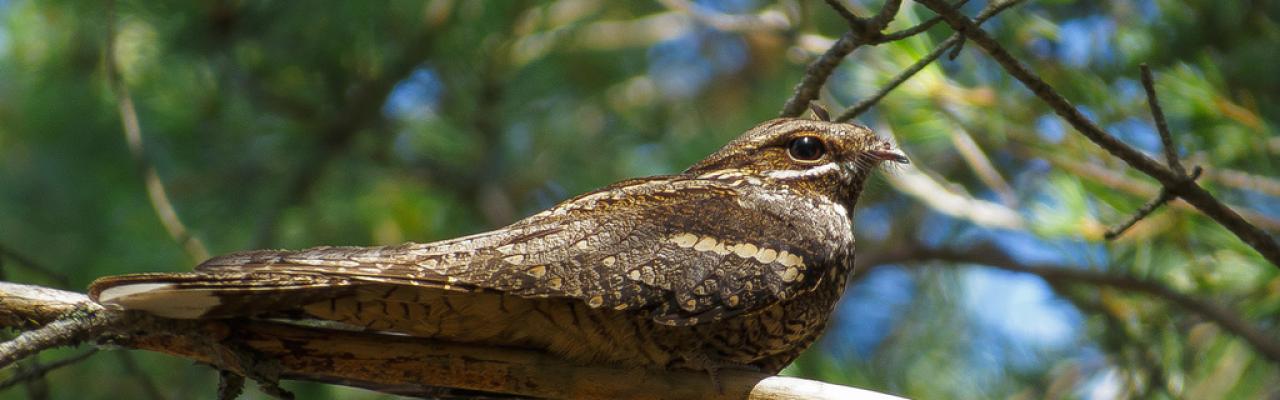
European Nightjar (Caprimulgus europaeus)
Our species of the month for August is the European Nightjar (Caprimulgus europaeus). These strange-looking birds are a very rare autumn migrant in Alderney, arriving in August and September as they make their way from breeding grounds in North, West, or Central Europe, to wintering grounds in sub-Saharan Africa.
Nightjars are nocturnal, feeding on moths, flies and beetles as they fly. To adapt to this nighttime hunting, the bird has big eyes and a small bill with a surprisingly large gape. Nightjars have particularly long and obvious rictal bristles, which are whisker-like feathers around their beak. The exact purpose of these bristles is unknown, but it is thought they may help the bird sense prey in low-light conditions or help funnel insects into their giant mouth as they fly.
Nightjars are amazingly well camouflaged, with grey-brown, bark-like plumage that helps them hide among the undergrowth. Like owls, the nightjars flight is almost silent, thanks to their soft feathers and long pointed wings. Nightjars don’t build a nest, instead the female lays two eggs directly on the ground.
The nightjar is also known as ‘goatsucker’, a direct translation of its Latin name ‘Caprimulgus’. This comes from an old myth that nightjars would suckle from goats at night, causing the goats to stop giving milk. Dating back to Aristotle, this tale comes from the fact that nightjars were often spotted around livestock where insects gathered.
If you see or hear a nightjar on Alderney, please send in your records!