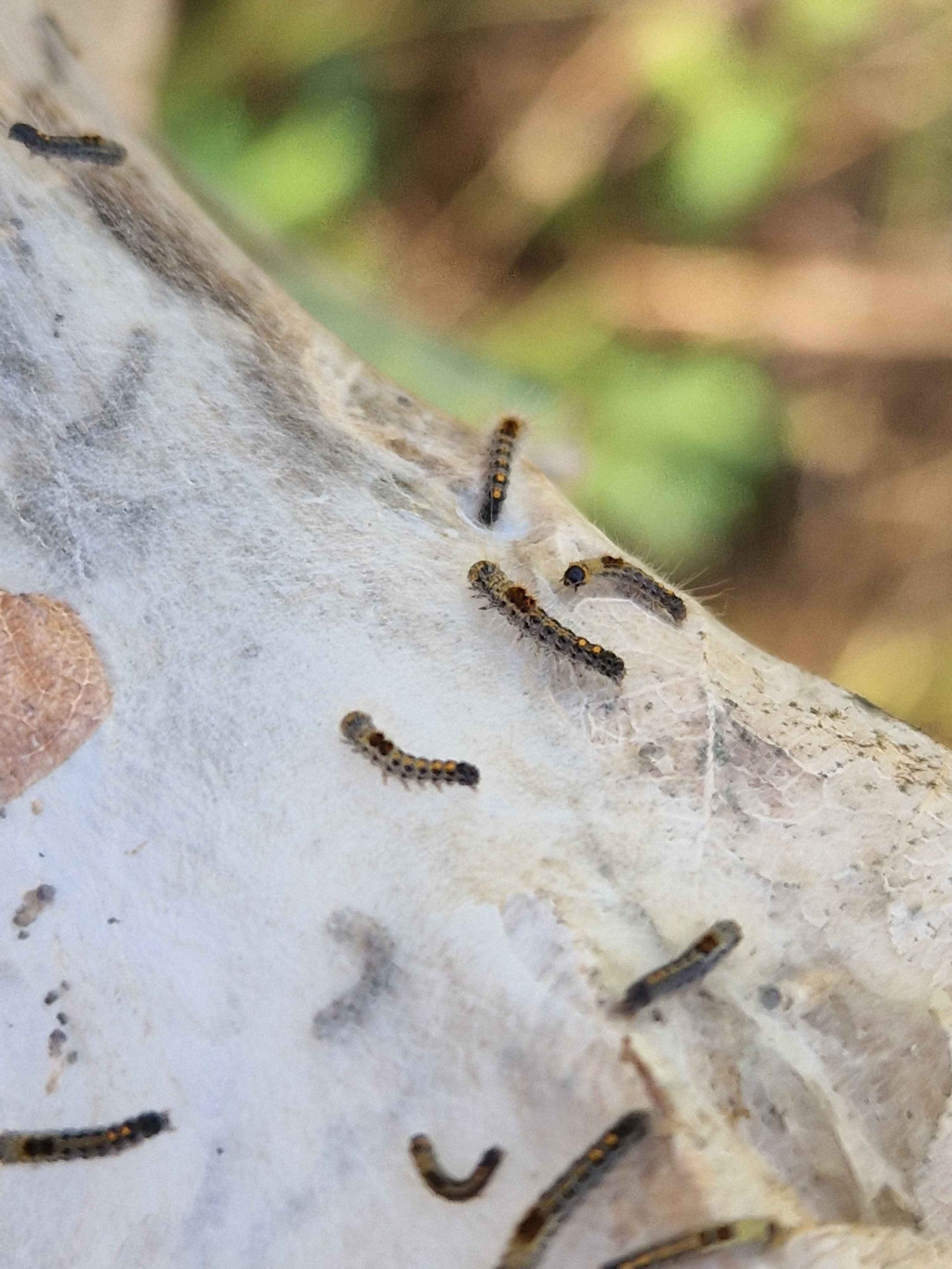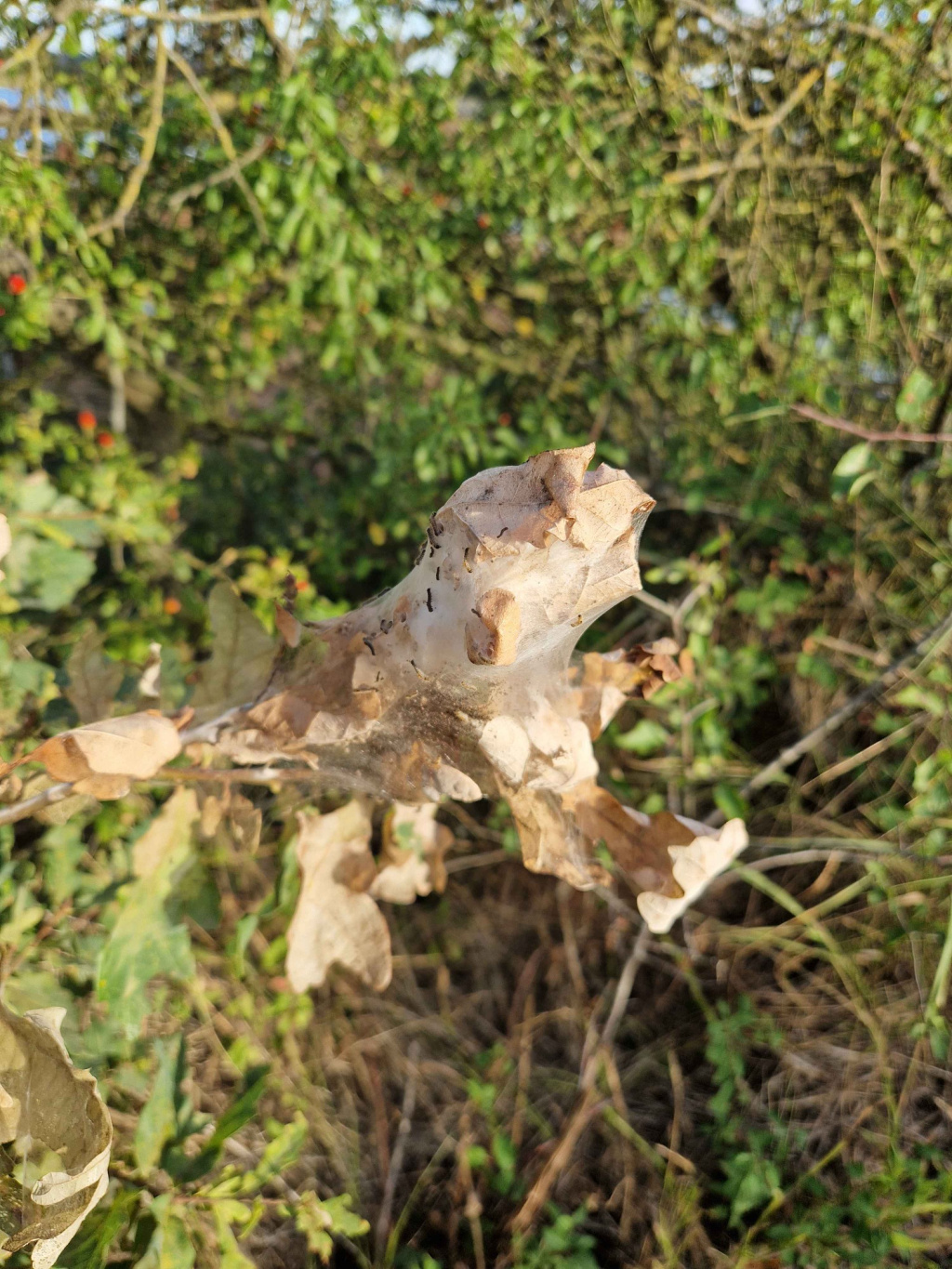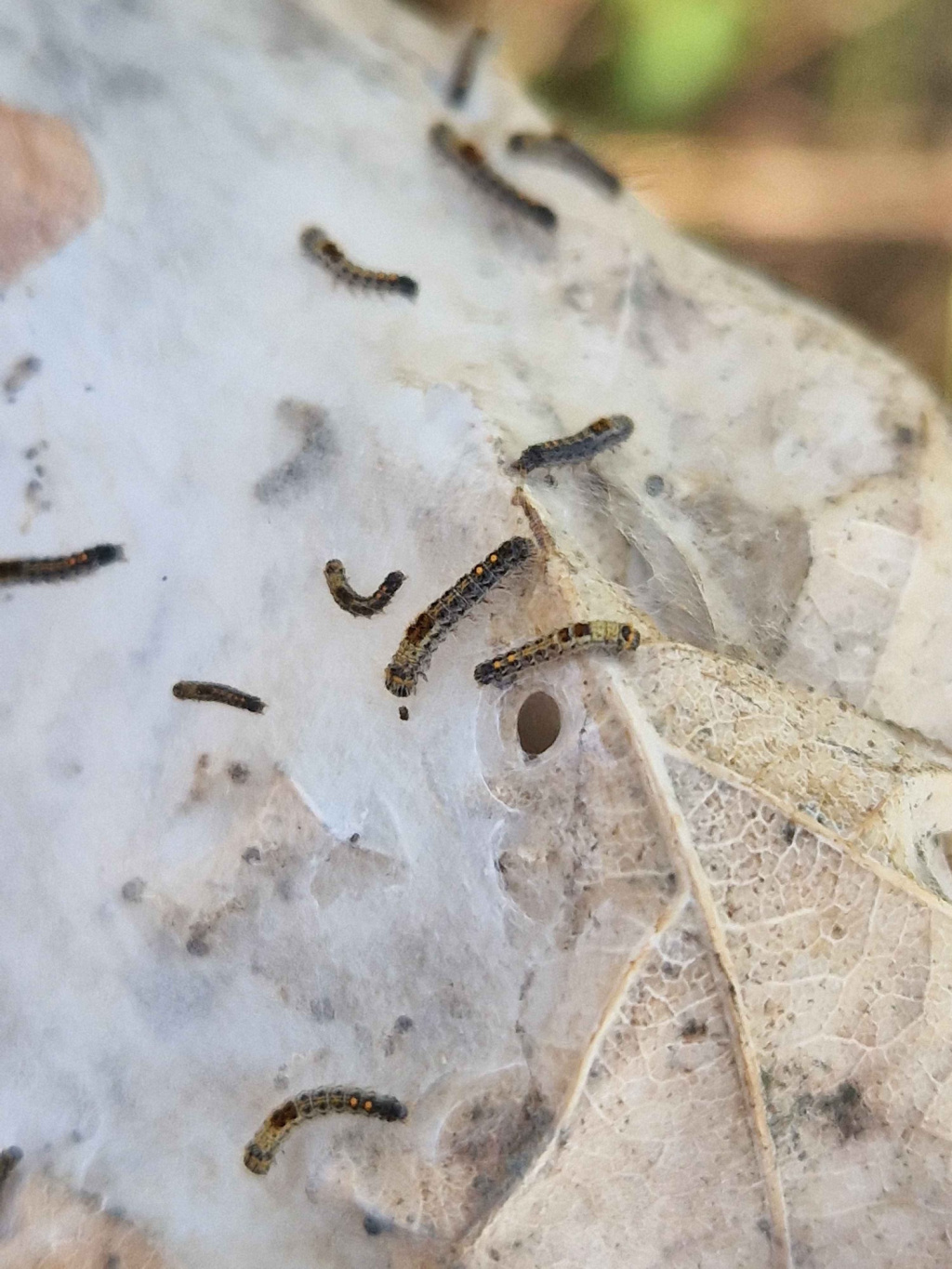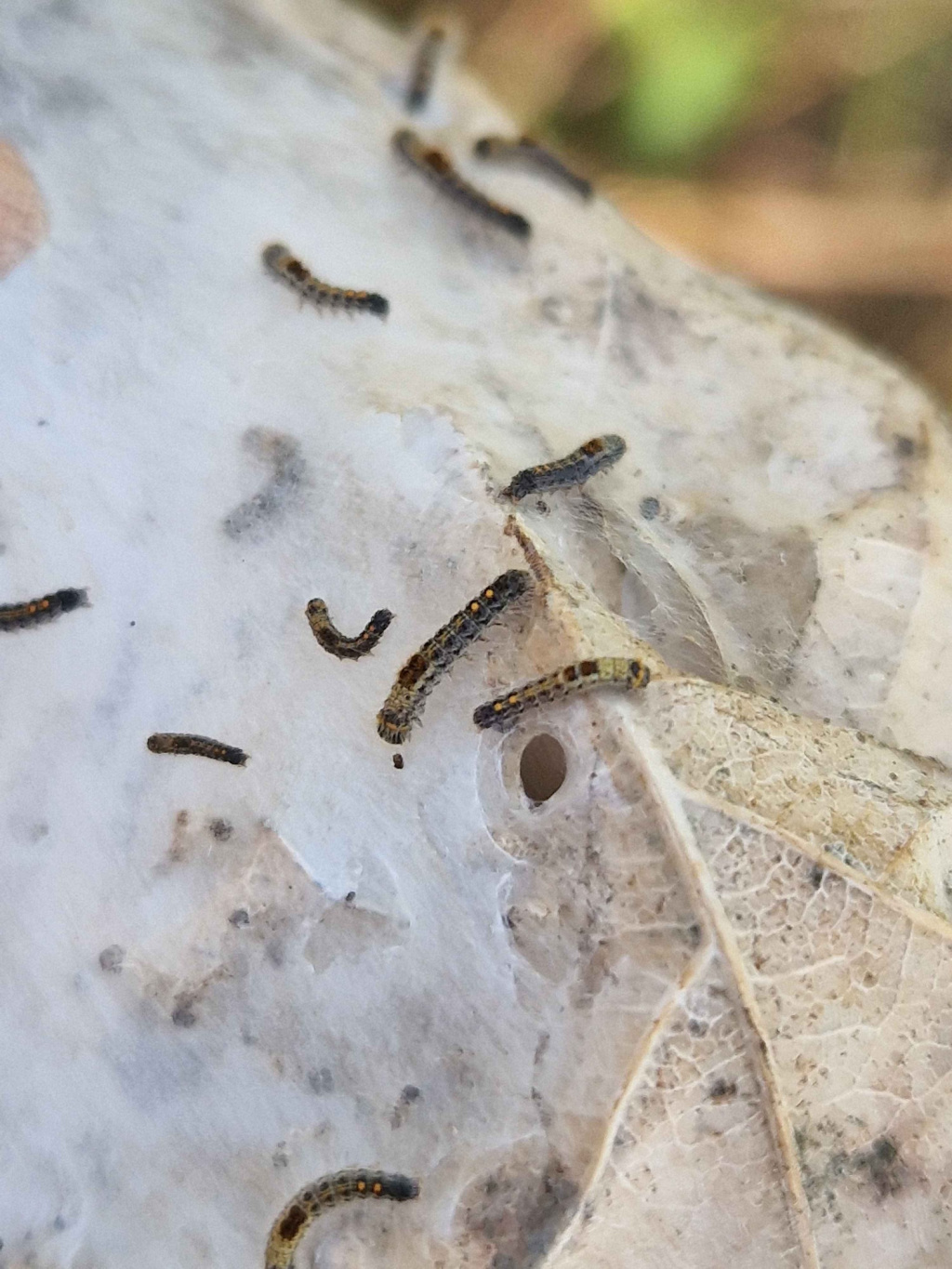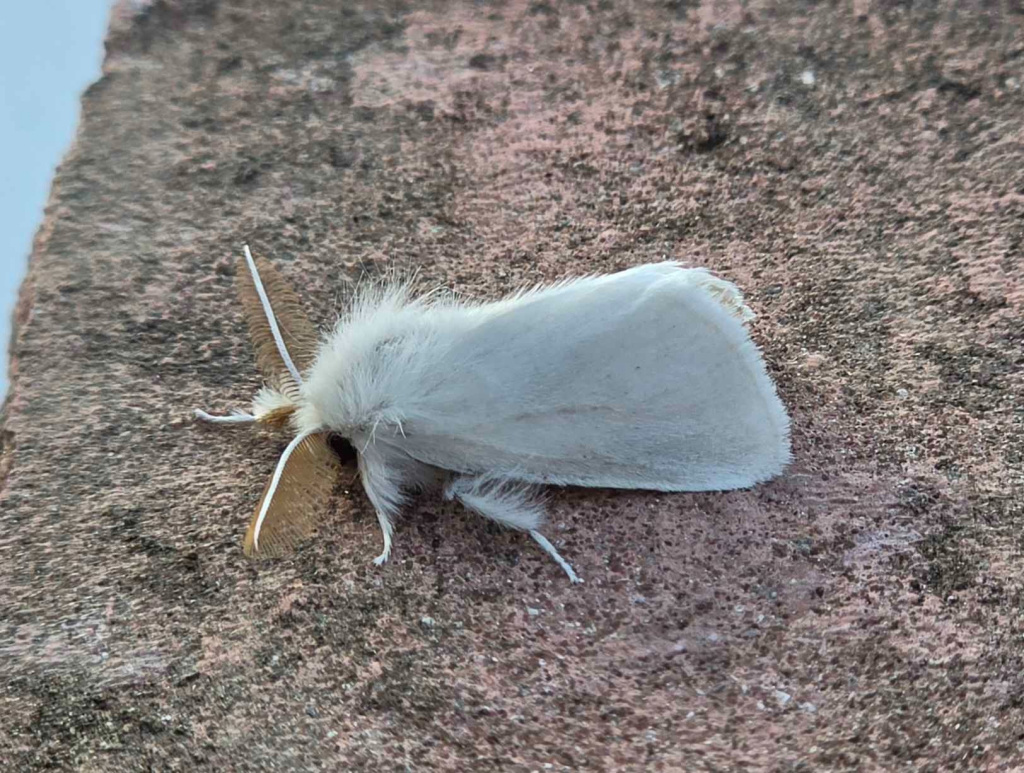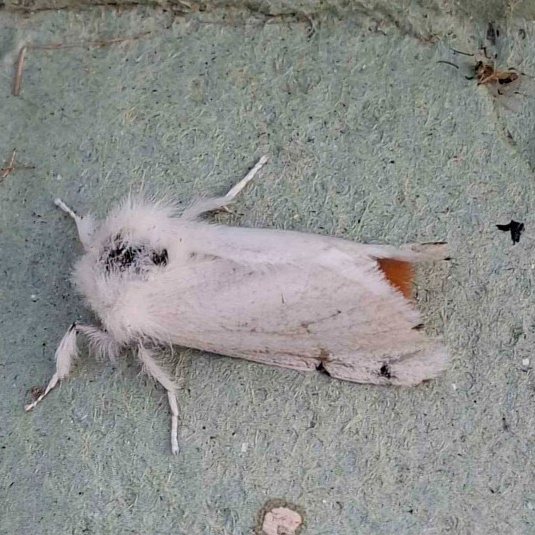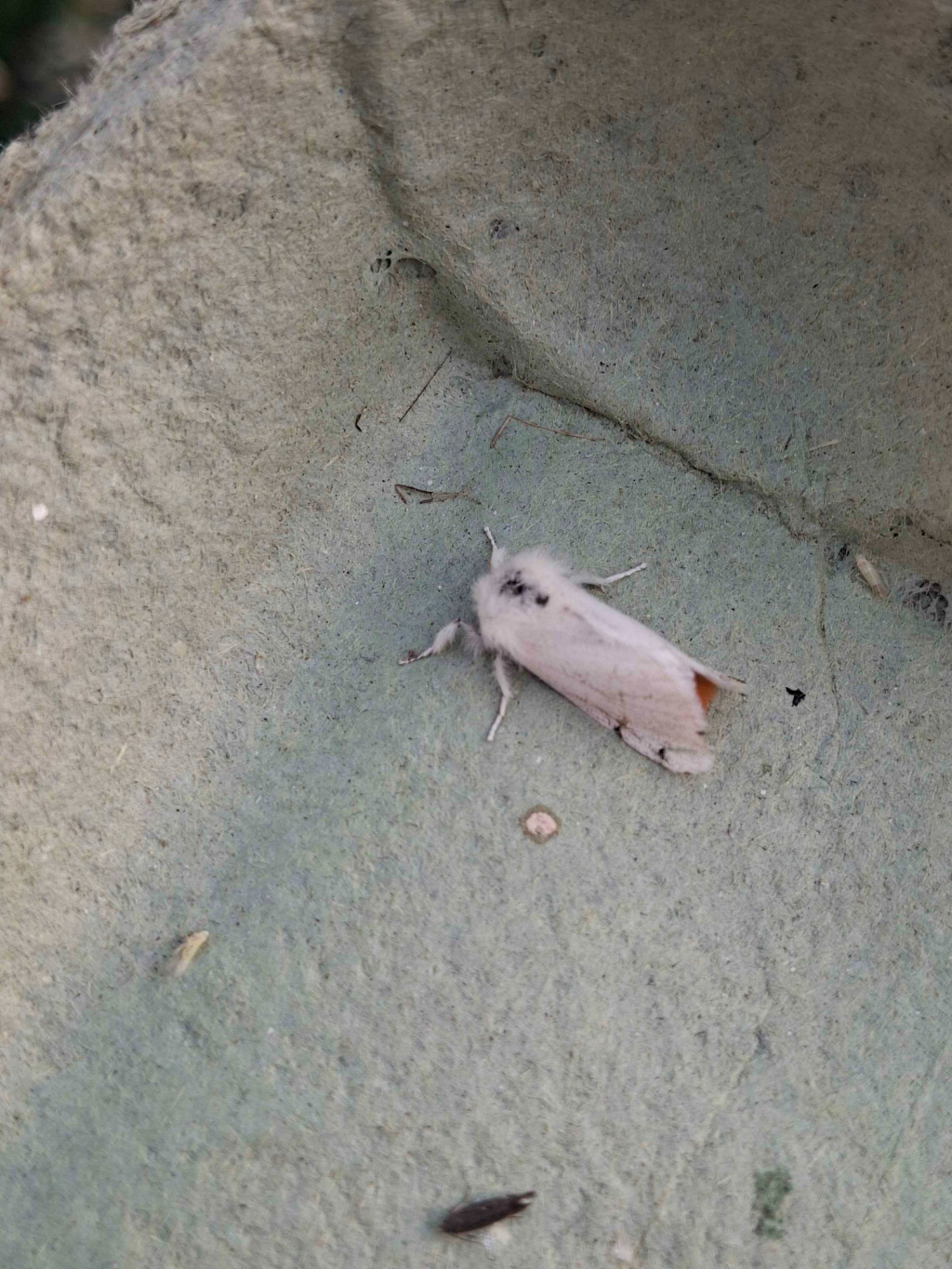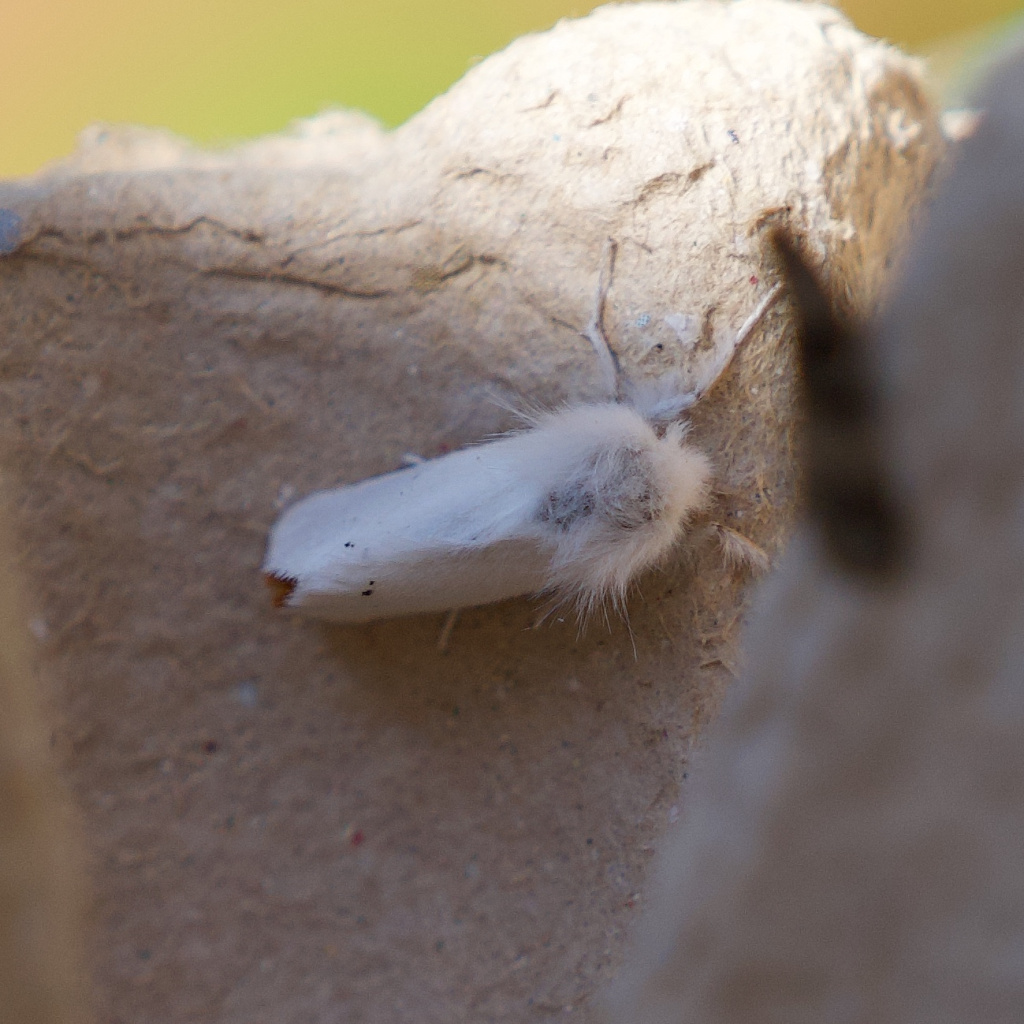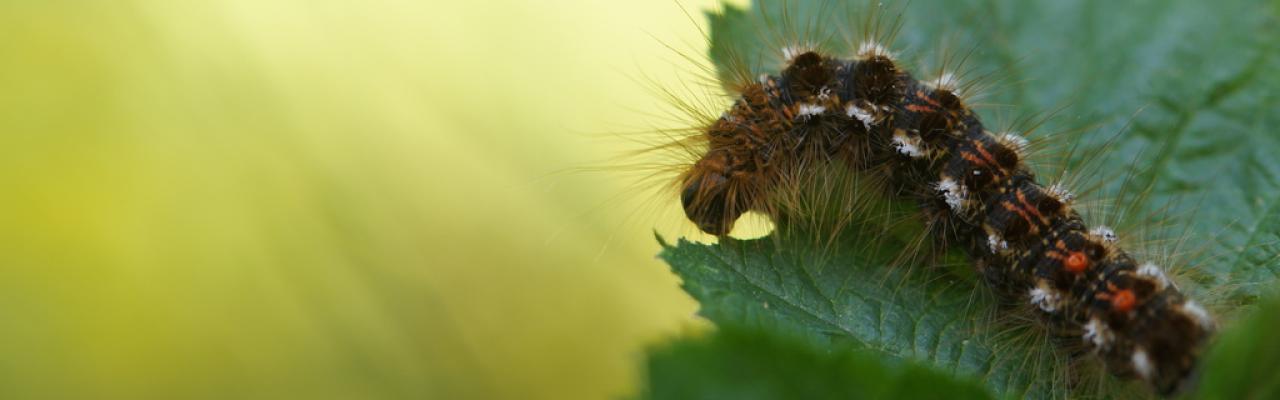
Brown-tail Moth (Euproctis chrysorrhoea)
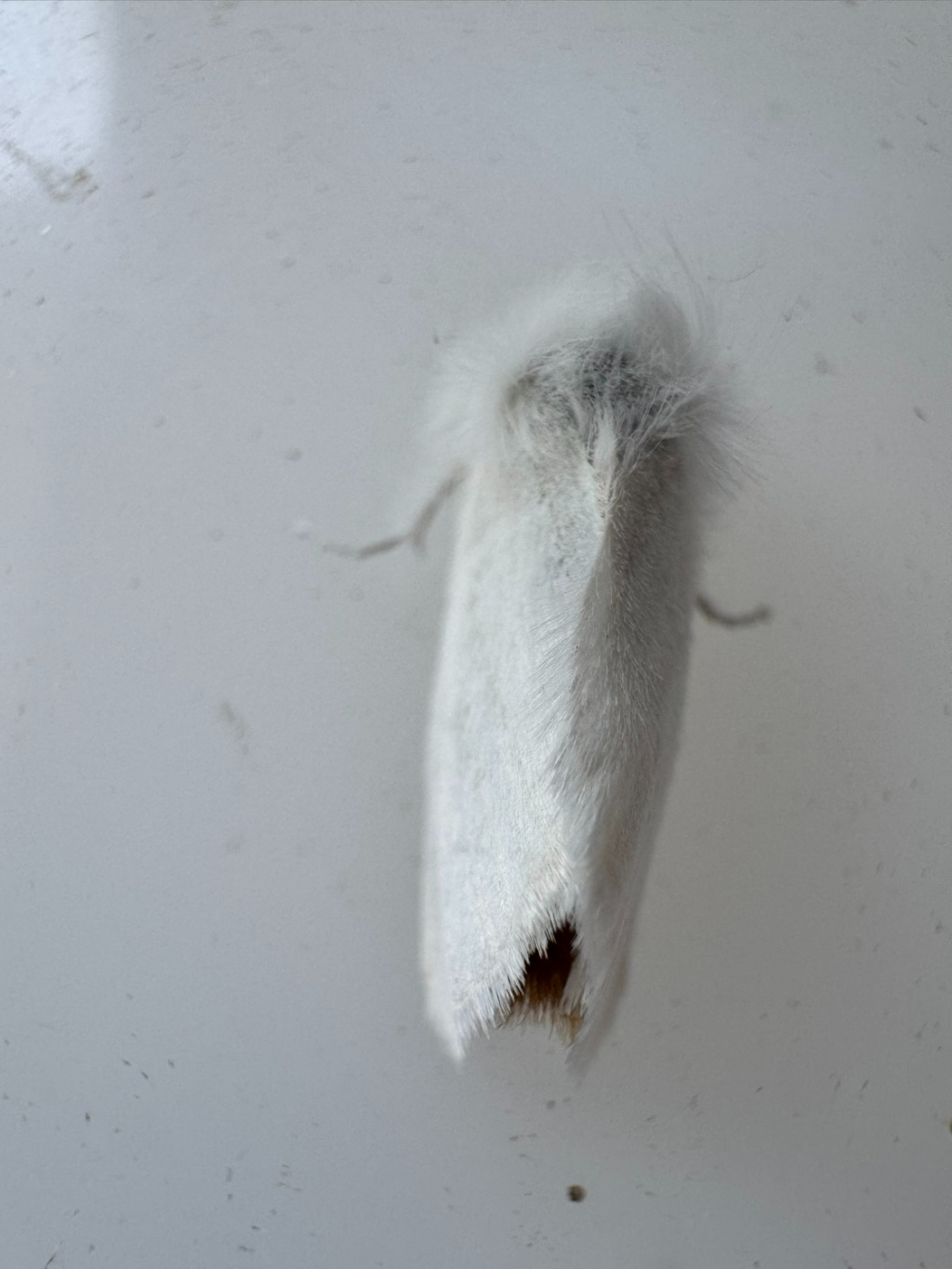
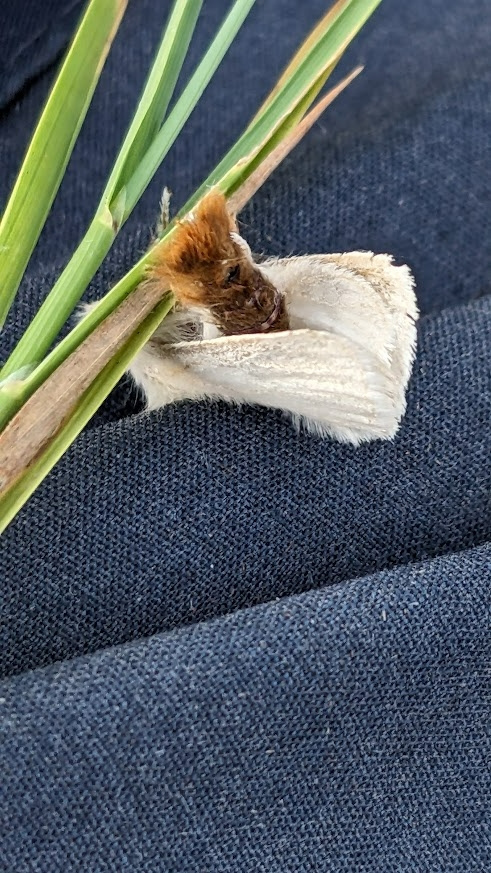
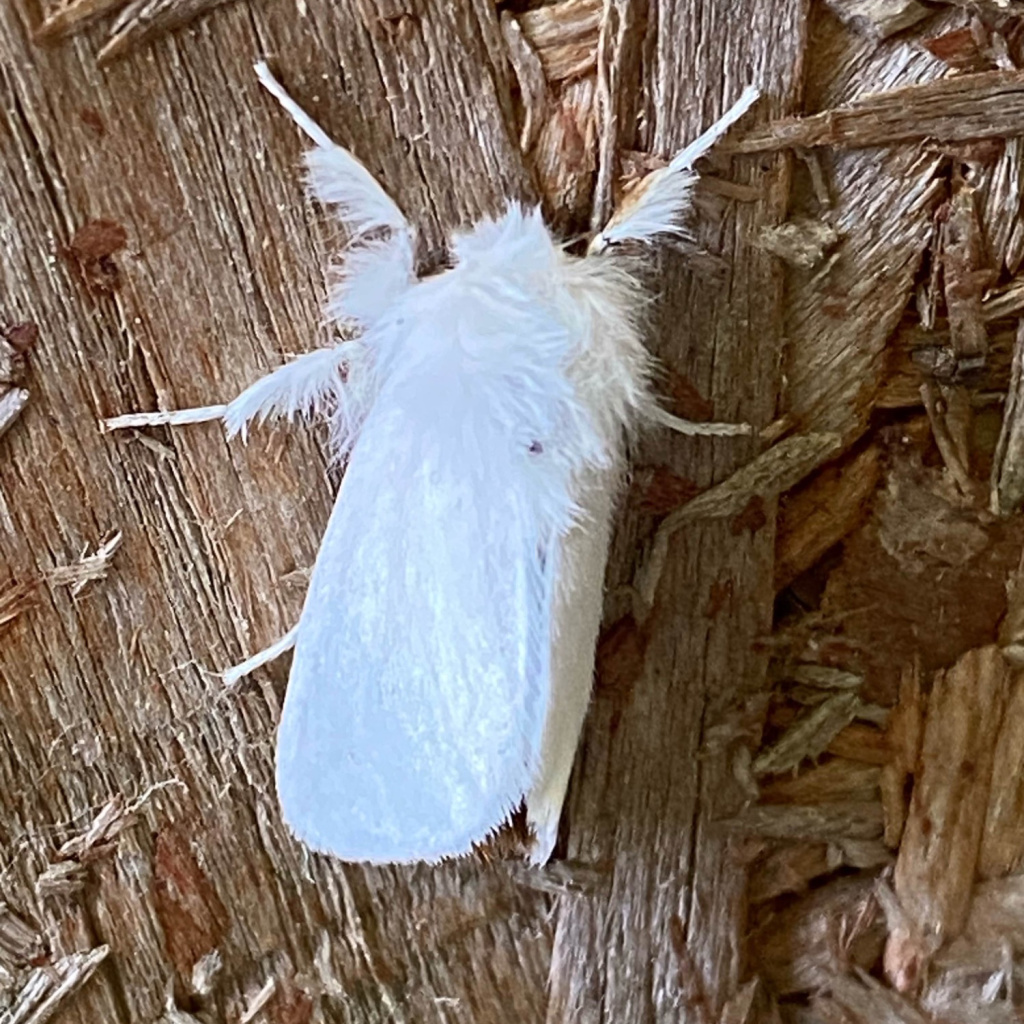
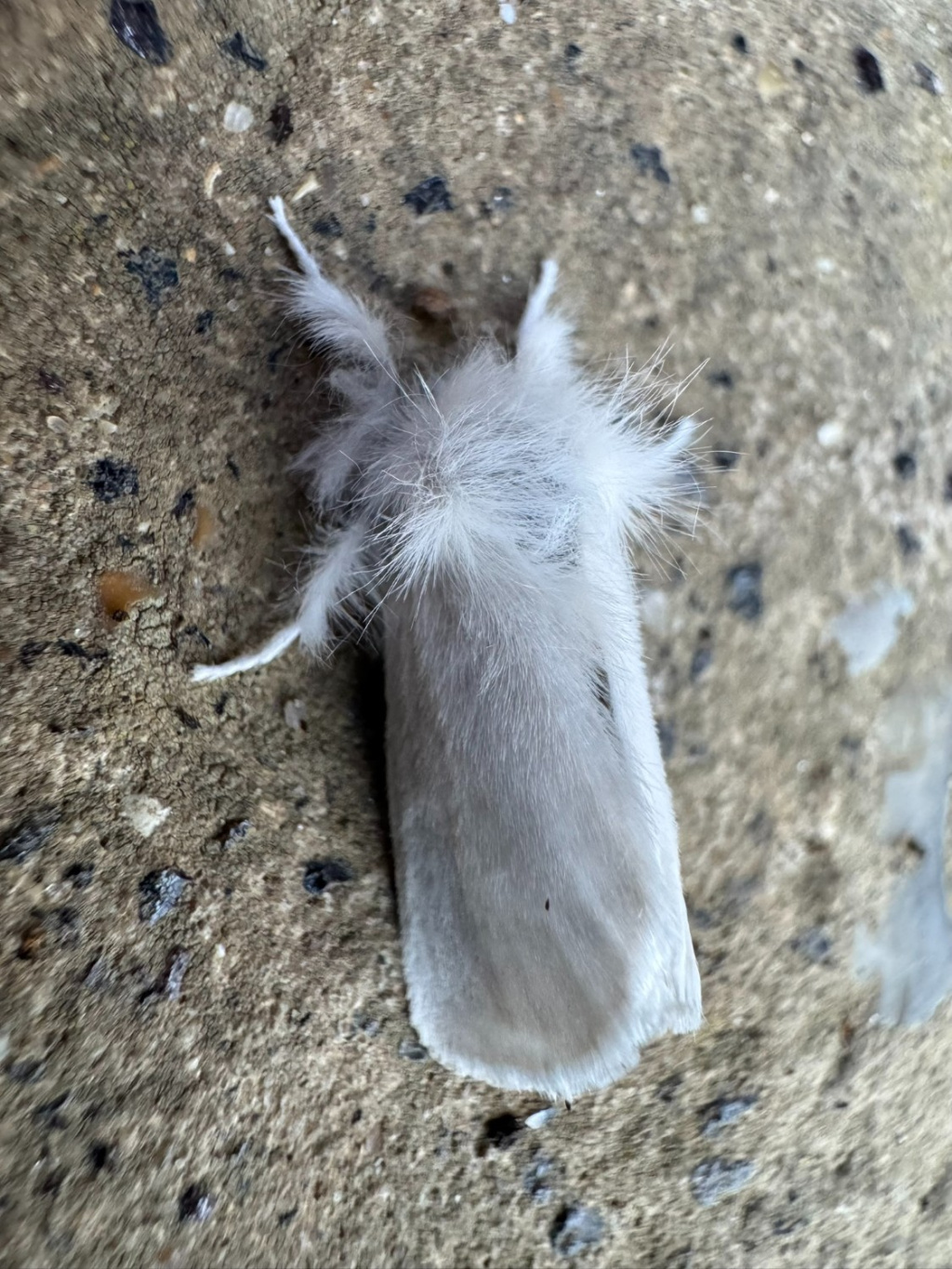
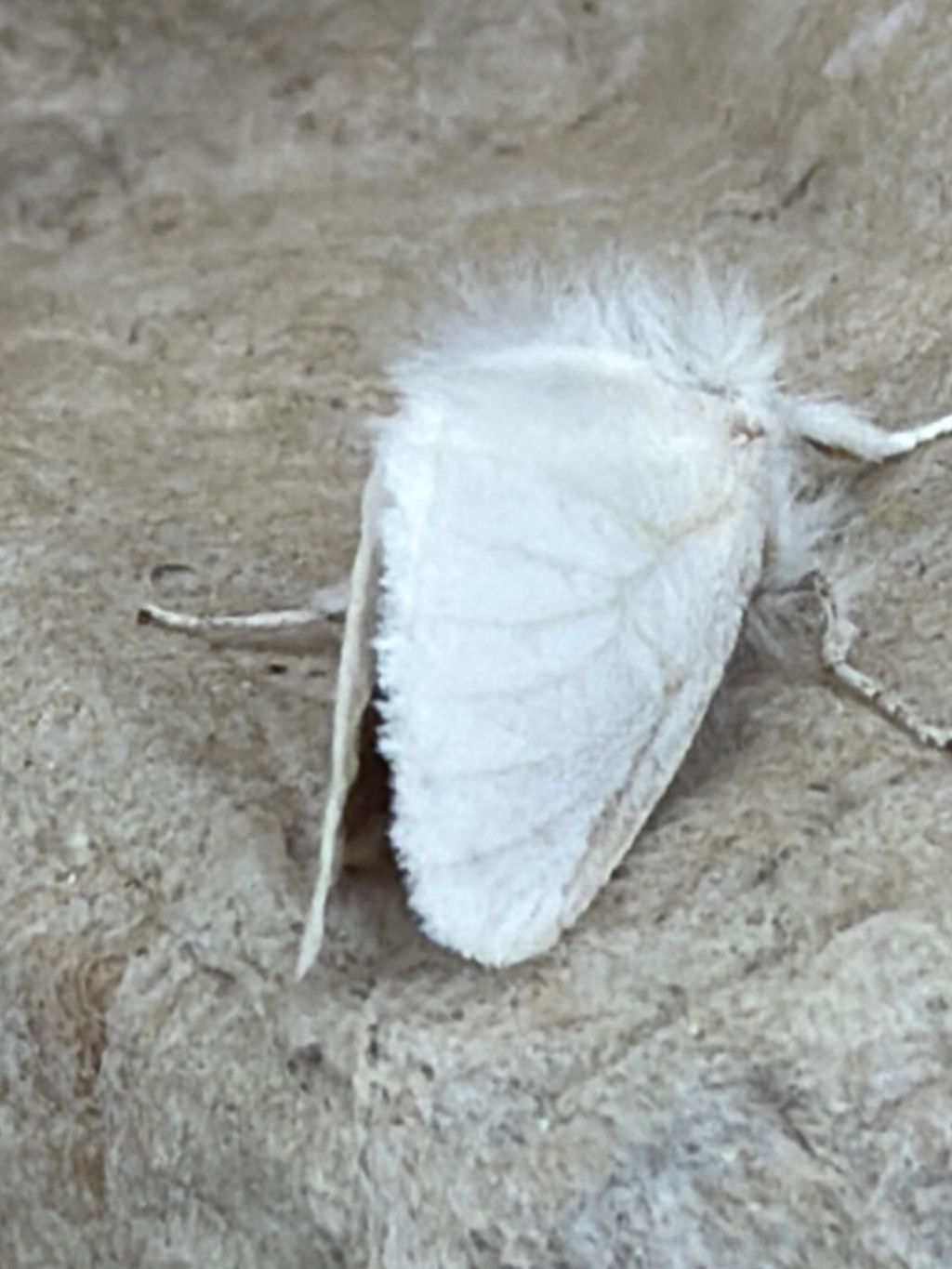
Our species of the month for July is the Brown-tail Moth (Euproctis chrysorrhoea). This white moth is found in coastal habitats, hedgerows and scrubby areas, and sometimes in parks and gardens. As the name suggests, this moth can be identified by the tuft of brown hairs at the tip of its abdomen. Adults have a wingspan of 36–42 mm and are on the wing in July and August, with a second generation sometimes emerging in October. They fly at night and are attracted to light; this July the Wildlife Trust’s weekly moth trap caught 58 in a single night!
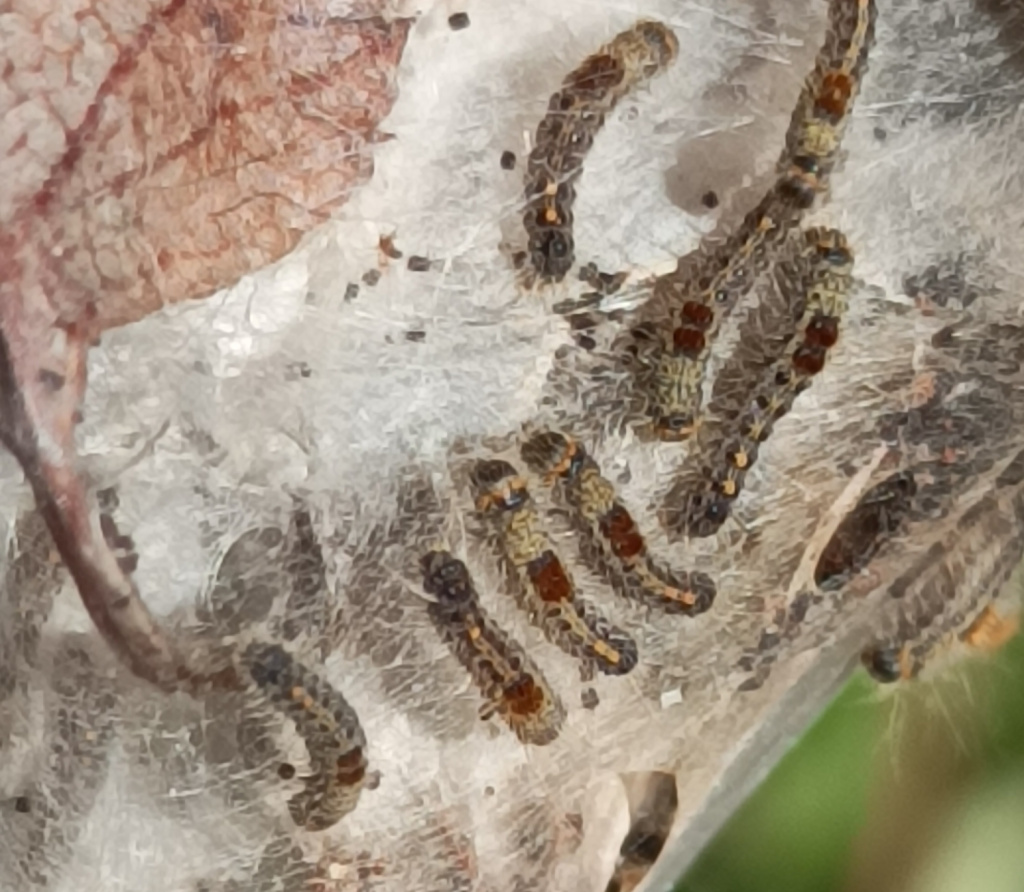
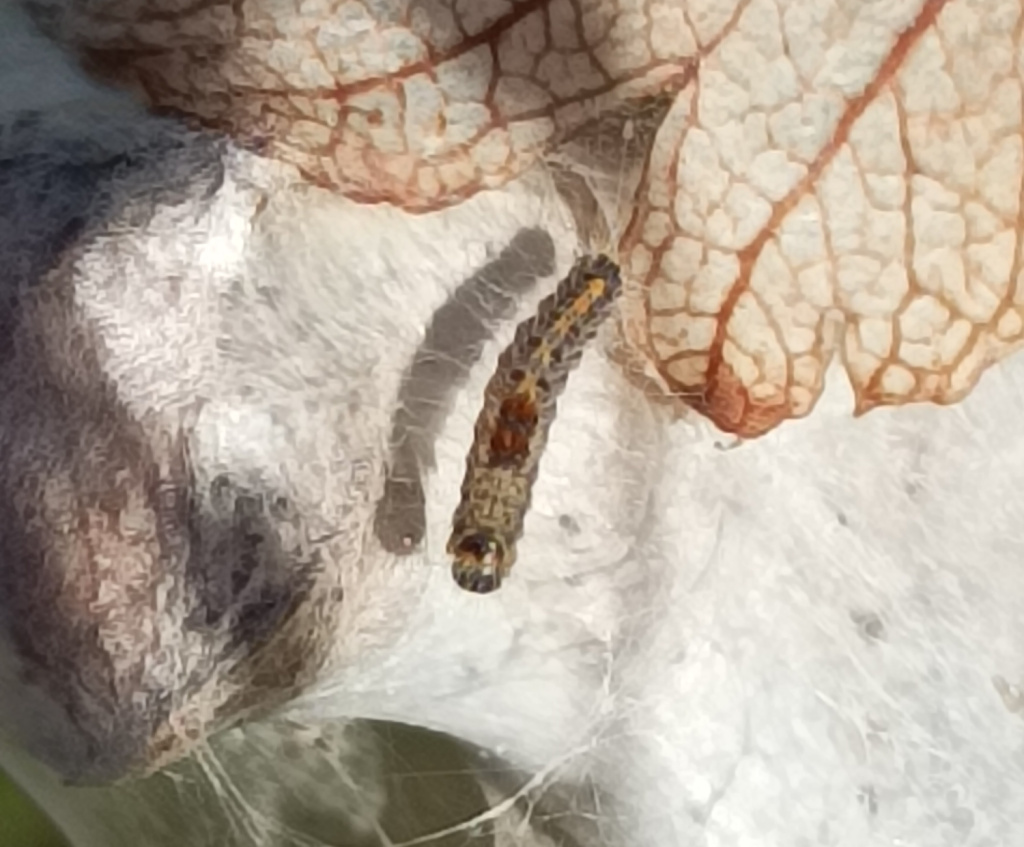
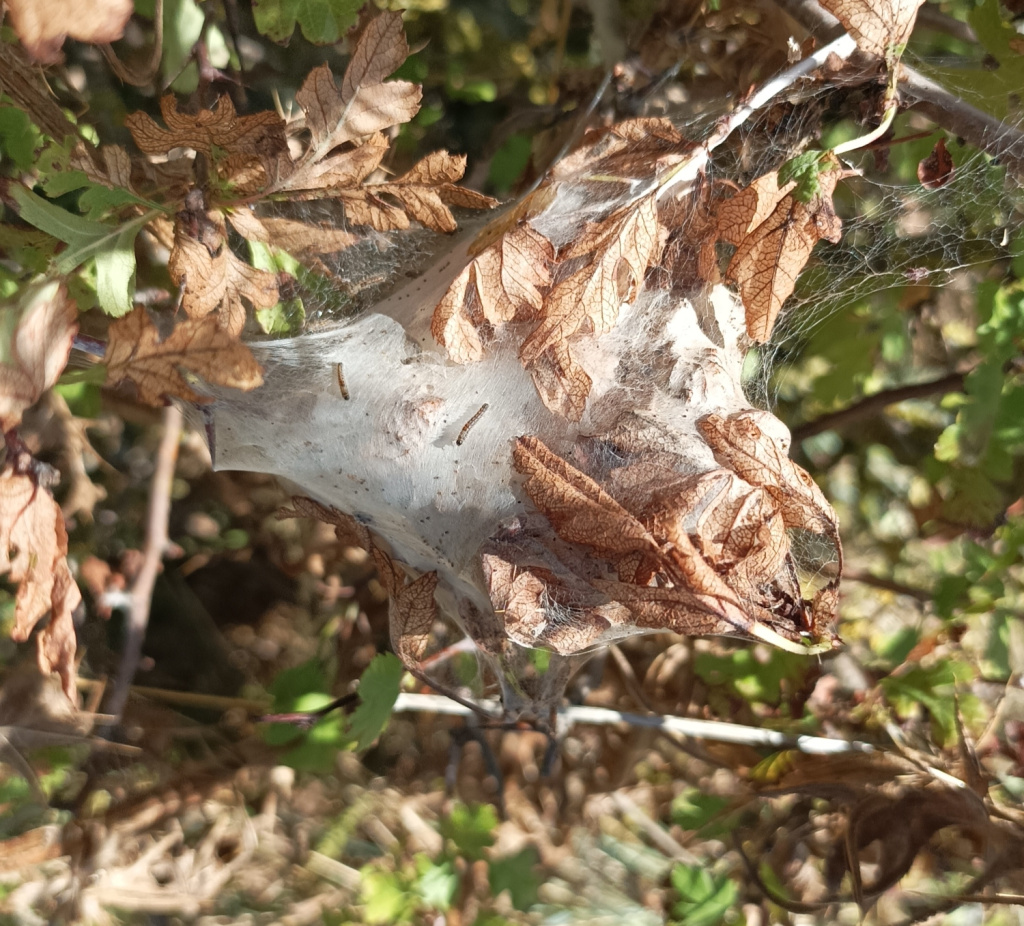
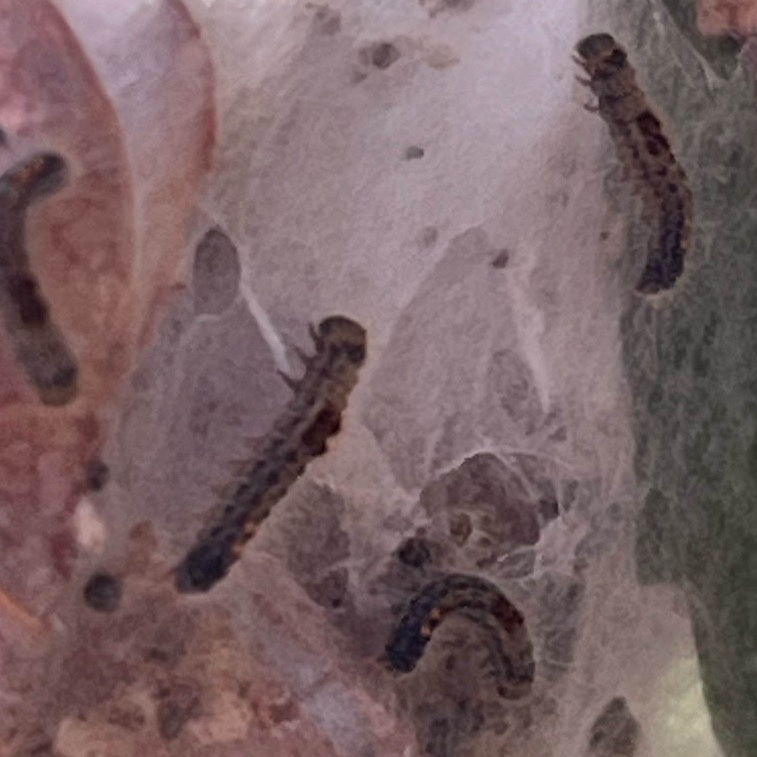
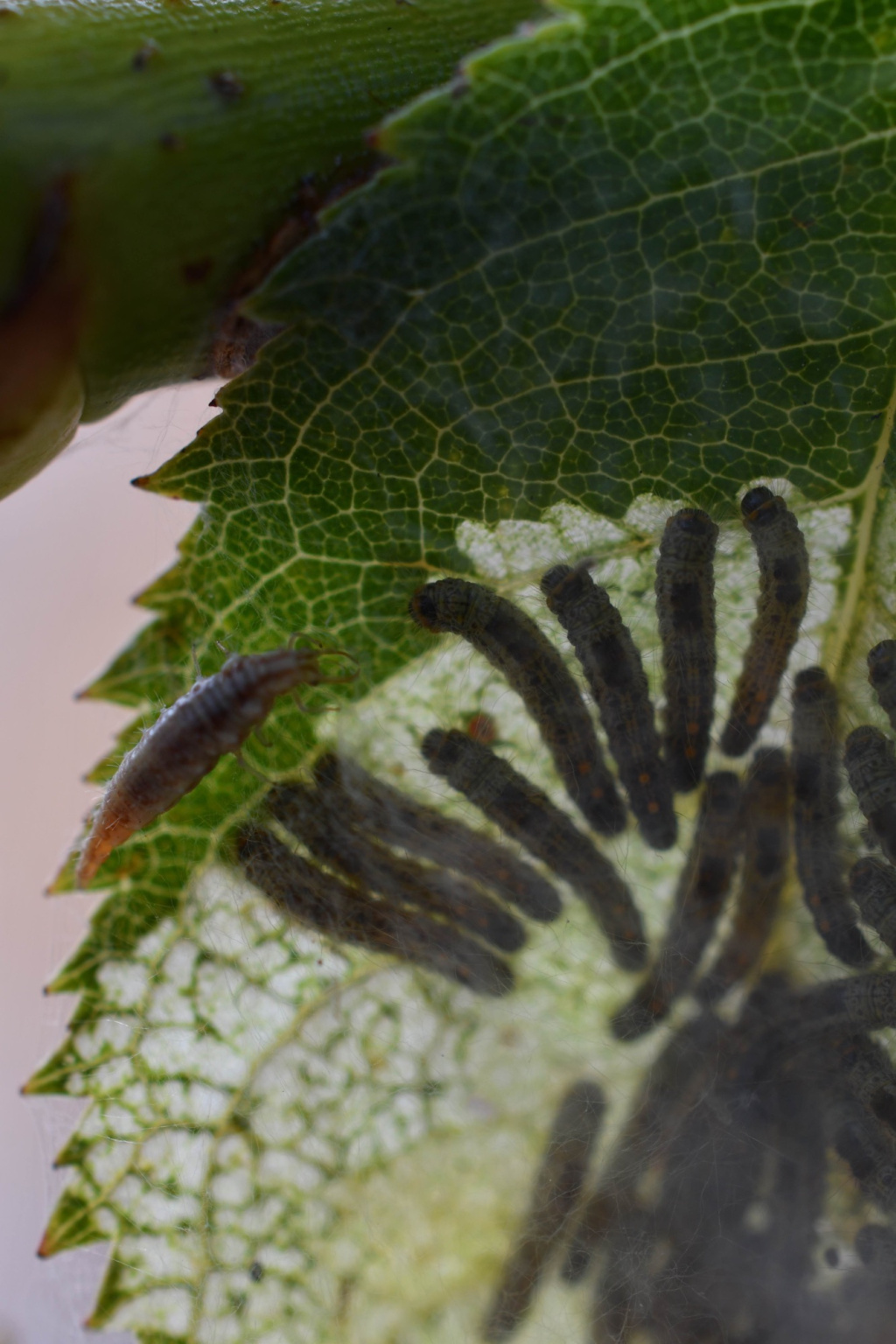
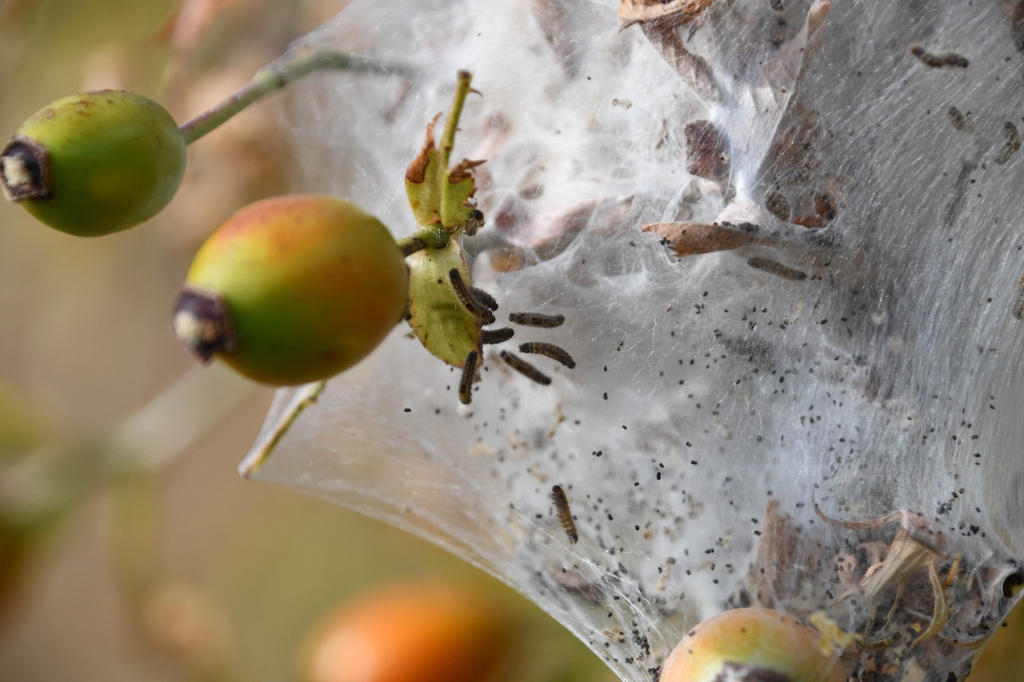
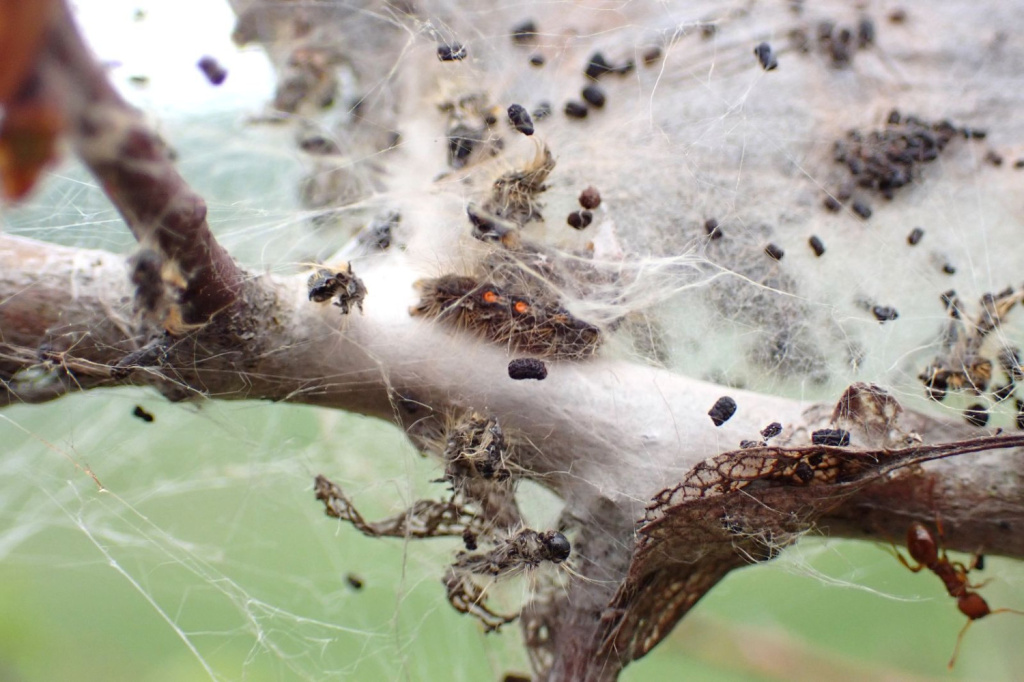
The brown-tail moth has an unusual life cycle, spending around nine months as a caterpillar and only around one month each as an egg, pupa and adult. Females lay clusters of eggs on foodplants such as hawthorn, blackthorn, bramble and sea-buckthorn, and cover them with brown hairs shed from their abdomen. Once hatched, the caterpillars spin dense communal webs across the plant, and in autumn they build tougher silk tents where they spend the winter together. In spring they awake again to feed, and can often be seen basking outside the web before pupating in a cocoon of silk and hair. On Alderney, their webs are a common sight along the south cliffs.
The caterpillars are a dark grey-brown colour, with a white stripe along each side and two red-orange dots near the rear. They are covered in urticating hairs that irritate human skin, so they should never be touched. Populations can boom in outbreaks lasting several years, which have been recorded as far back as the 1500s.
If you spot the brown-tail moth or their larval webs around Alderney, please send us your records, but look, don’t touch!
Species Details
- Species name
- Euproctis chrysorrhoea (Linnaeus, 1758)
- Common name
- Brown-tail
- Other common names
- Siobyn Cynffon Frown, Siobynnau Cynffon Frown
- Synonym
- Euproctis phaeorrhoeus (Haworth, 1803)
- Taxonomy
- Animalia :: Lepidoptera :: Erebidae
- arboreal